
A cooling mat can make a properly ventilated car journey more comfortable for your dog, but it cannot make a hot car safe. The best choice for most journeys is a pressure-activated gel mat that fits the usable space, is easy to wipe clean and can be kept cool before you set off.
Our best overall choice is the Trixie Cooling Mat because it is specifically approved by the manufacturer for car use, comes in six practical sizes and has clear care and temperature warnings. The Rosewood Chillax Cool Pad is the easiest compact option, the Scruffs Cool Mat offers the strongest size range for larger dogs, and the Argos Pet Cooling Crate Mat adds padding for dogs that prefer a bed-like surface.
Important: A cooling mat is an extra comfort aid, not protection against a dangerously warm cabin. Keep the car cool with ventilation or air conditioning, check the temperature where your dog is actually travelling, stop regularly and never leave your dog alone in a parked vehicle.
Cool Canine may earn a commission if you buy through some links on this page. This does not affect which products we recommend or what you pay.
Quick picks: the best dog cooling mats for cars & travel
Best Overall
Trixie Cooling Mat
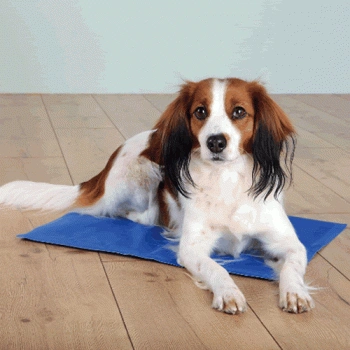
A versatile, pressure-activated cooling mat available in six sizes that works well for most car journeys and travel setups. It’s easy to wipe clean, folds away neatly and is one of the few manufacturers to specifically mention car use.
Best for: Most dogs travelling by car, whether on the rear seat, in the boot or in a travel crate.
Main drawback: Must not be used in direct sunlight or stored above 45°C, so it should not be left in a hot parked car.
Best compact option
Rosewood Chillax Cool Pad – Medium
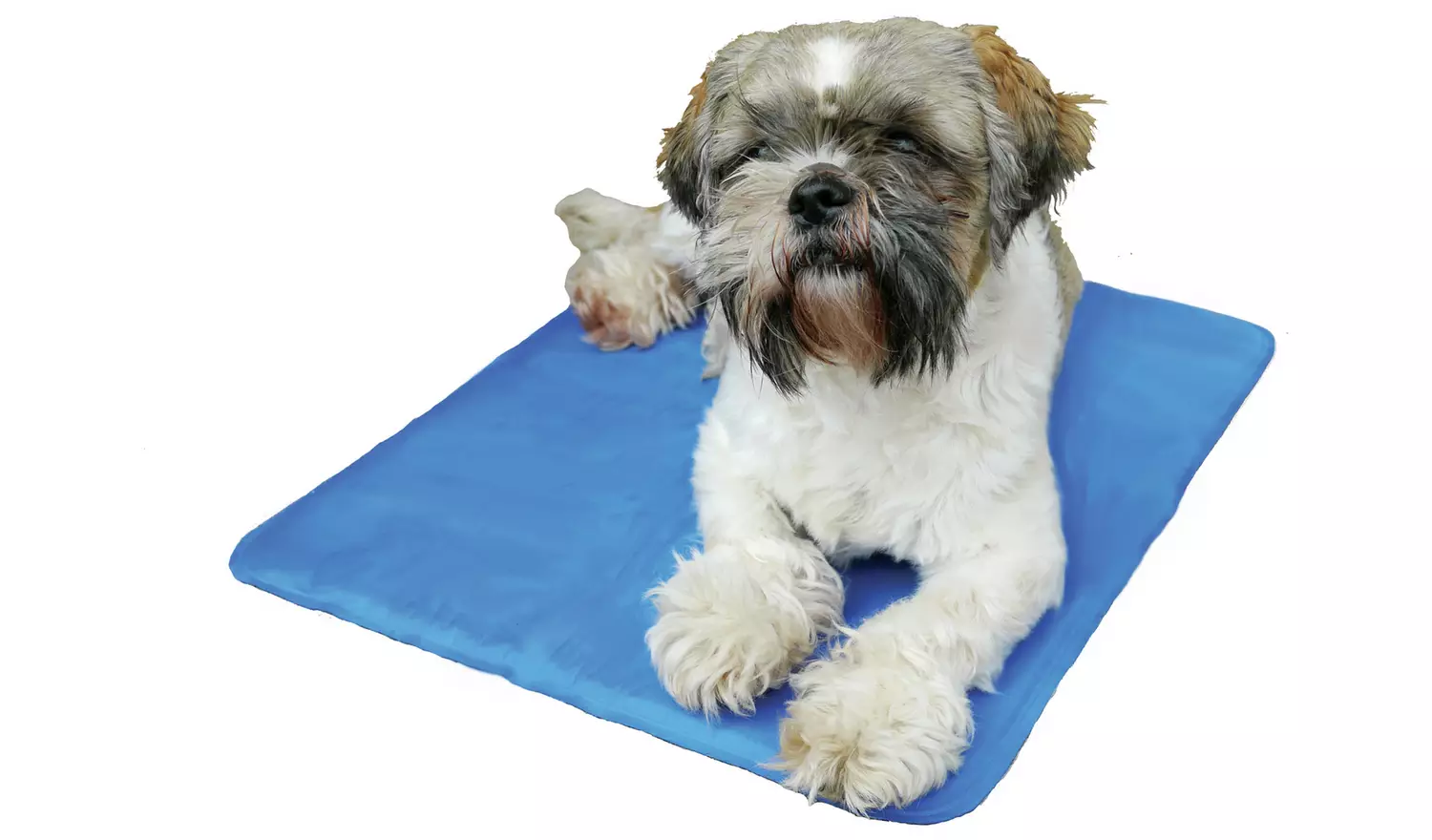
A lightweight cooling pad that folds into a small space, making it ideal for compact cars, pet carriers and smaller travel crates where space is limited.
Best for: Small dogs, compact vehicles and owners who need a highly portable mat.
Main drawback: The medium size is too small for many medium and large breeds.
Best for large dogs
Scruffs Cool Mat
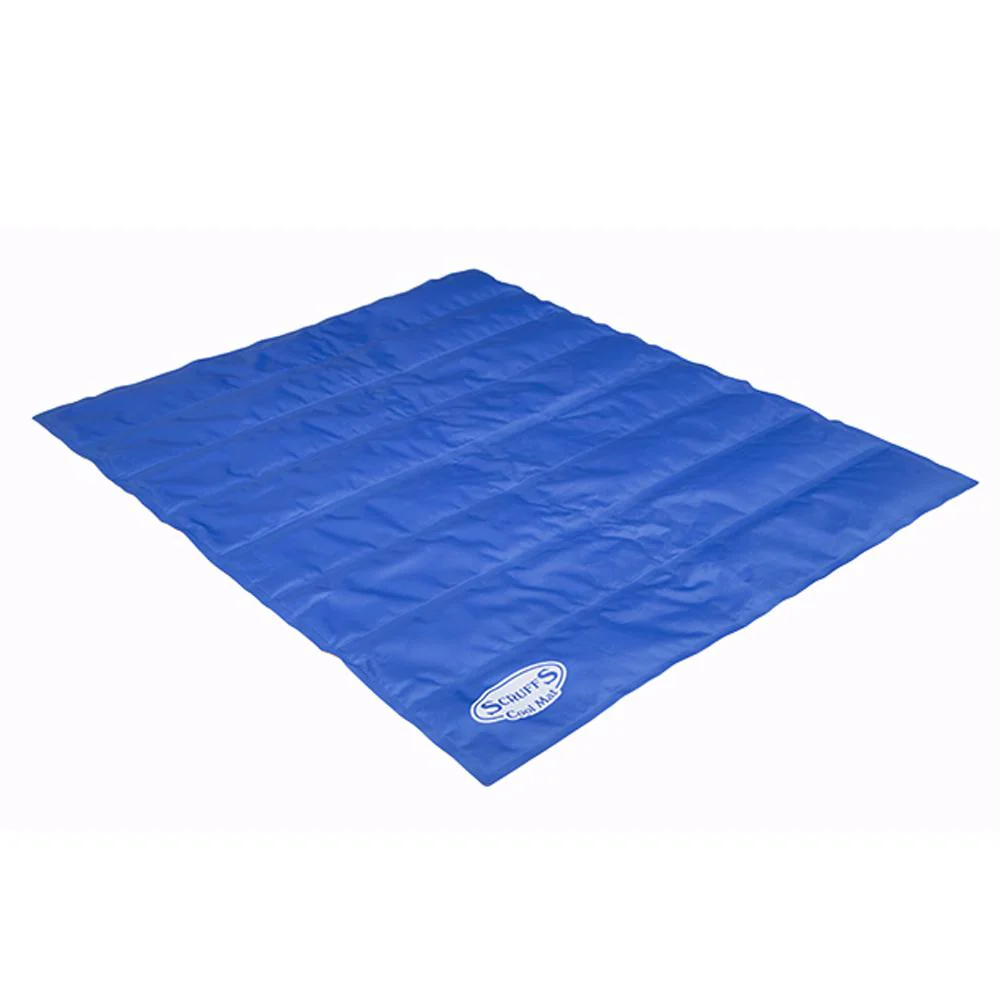
Offered in sizes up to 120 × 75 cm, giving large breeds enough cooling surface while remaining suitable for use in larger boots and travel crates.
Best for: Large breeds and owners with SUVs, estates or larger travel crates.
Main drawback: The largest sizes are bulkier to carry and UK availability can vary throughout the summer.
Best padded crate option
Pet Cooling Crate Mat – Medium
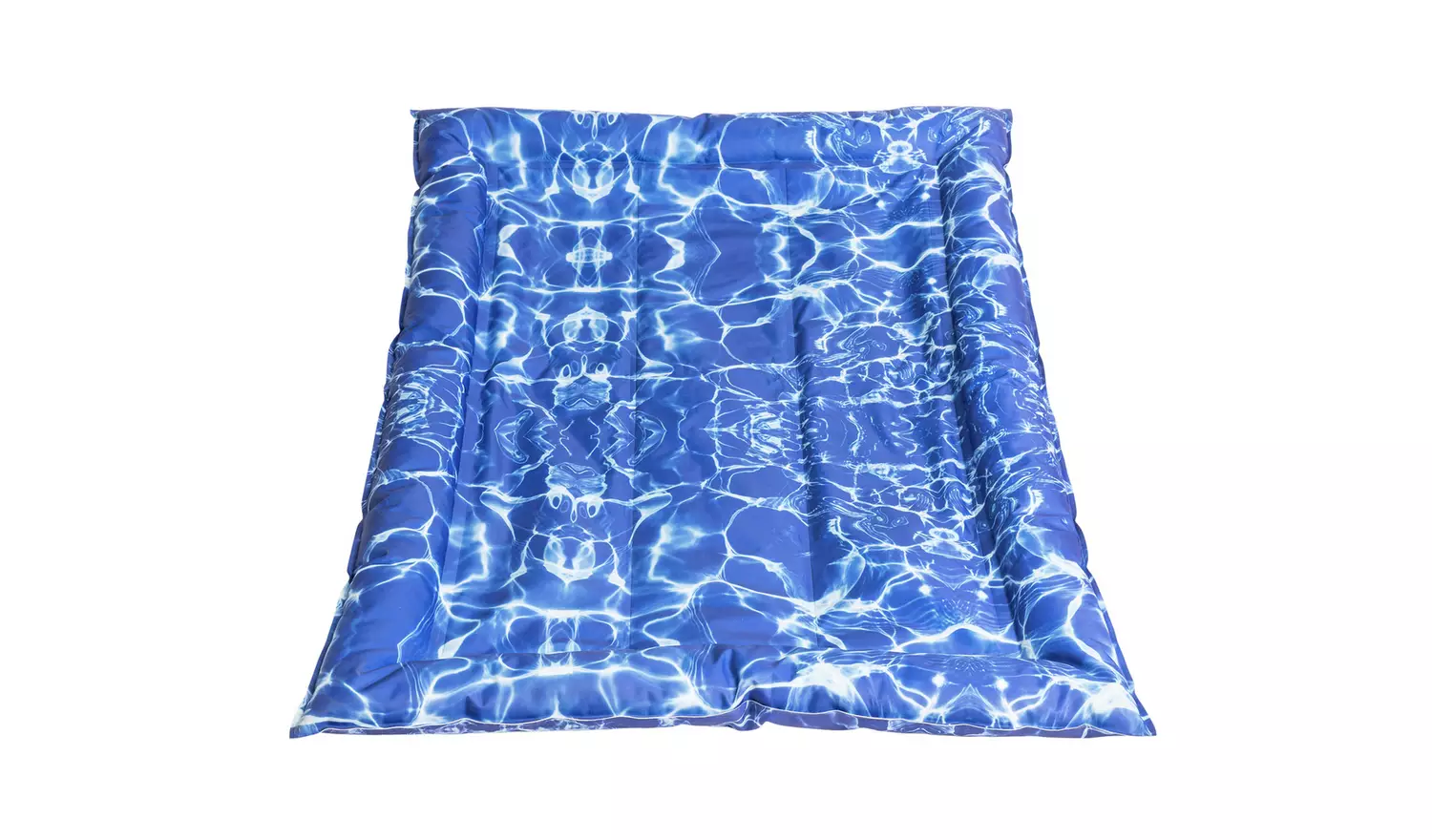
Combines a cooling gel sleeping surface with padded raised sides, making it more comfortable than a standard flat cooling mat inside an appropriately sized crate.
Best for: Dogs that travel in a crate and benefit from additional comfort and support.
Main drawback: The usable sleeping area is only 64 × 34 cm, so careful measuring is essential, and it is not suitable for dogs that chew their bedding.
Our verdict
Choose the Trixie Cooling Mat if you want the safest all-round buying decision. Its range runs from 40 × 30 cm to 110 × 70 cm, so it is easier to match the mat to a rear seat, boot floor or travel crate rather than forcing one standard size into every car. It works through body contact without water, electricity or refrigeration, and it can be wiped clean after a journey.
The most important limitation applies to every pressure-activated mat: it absorbs heat. If it has been left in a hot vehicle or in direct sunlight, it may be warm before your dog lies on it. Keep the mat indoors or in another cool, shaded place before travel, then place it in a car that has already been cooled.
You may not need to buy a separate travel mat if your existing cooling mat fits securely, is undamaged, does not slide or bunch and can be stored somewhere cool before use. If you’re choosing a mat for general use as well as travel, our guide to the best dog cooling mats compares the strongest all-round options. For a wider look at vehicle cooling products, use the Cool Canine guide to keeping a dog cool in the car.
How we chose these cooling mats
This is a research-based guide. Cool Canine has not claimed hands-on testing of these products. Recommendations were selected after defining the practical job first: fitting safely into a car or crate, remaining portable, being easy to clean and offering useful cooling contact without interfering with restraint or ventilation.
- Current UK availability and identifiable product variants.
- Exact dimensions and the range of sizes offered.
- Manufacturer or retailer instructions for cooling, resetting, cleaning and storage.
- Whether the product is intended for a car, carrier or crate.
- Portability, foldability and the space required when not in use.
- Warnings about direct sun, high temperatures, chewing and damage.
- Whether the product serves a distinct travel use case rather than adding another near-identical mat.
Best overall: Trixie Cooling Mat
Best for: Most dogs travelling by car, whether on the rear seat, in the boot or in a travel crate.
The Trixie Cooling Mat is the strongest general choice because its official instructions specifically include use in a car and the six-size range is unusually flexible: 40 × 30 cm, 50 × 40 cm, 65 × 50 cm, 90 × 50 cm, 100 × 60 cm and 110 × 70 cm.
Its gel is activated by body contact and requires no water, electricity or prior refrigeration. The smooth PVC and polyester surface can be wiped clean, which is useful after muddy walks, beach trips or stops at service stations.
The warnings are also clearer than on many competing products. Trixie says not to use the mat in direct sun and not to use or store it above 45°C because the gel can become too hot, turn more liquid and lose its cooling effect. Temperature changes can also cause moisture, so the mat should be spread out and dried when necessary rather than put away damp.
The 65 × 50 cm version is a sensible starting point for many medium dogs and compact boot spaces, while the 90 × 50 cm and larger versions provide more torso contact for bigger dogs. Measure the actual usable area before choosing: a nominally larger mat is a poor purchase if it curls against a crate door, blocks a vent or bunches around a harness attachment.
Advantages: broad size choice; verified car suitability; no freezing or filling; straightforward cleaning; clear safety instructions.
Limitations: thin rather than cushioned; not suitable for chewing dogs; can absorb heat from a hot car; the largest sizes take more storage space.
Bottom line: the best broad fit for owners who measure first and keep the mat cool before the journey.
Best compact option: Rosewood Chillax Cool Pad – Medium
Best for: Small dogs, compact vehicles and owners who need a highly portable mat.
The medium Rosewood Chillax Cool Pad measures 40 × 50 cm and is sold as suitable for beds, crates, kennels and car travel. It is pressure activated, needs no electricity and is designed to recharge as the dog moves away from it. Its segmented construction also makes it easier to fold and carry than a bulky padded bed.
The compact size is both its strength and its weakness. It can fit where a large gel pad cannot, but it will provide limited coverage for many adult medium and large dogs. Mark out 40 × 50 cm with a tape measure before ordering; product photographs can make a small mat look more generous than it is.
Advantages: compact; easy to store; wipe-clean; designed for travel; budget-friendly when available.
Limitations: limited coverage; clearance stock may disappear; no reasoned basis to choose it for a larger dog when a better-fitting size is available.
Bottom line: a practical small-car choice for a small dog, not a universal travel mat.
Best for large dogs: Scruffs Cool Mat
Best for: Large breeds and owners with SUVs, estates or larger travel crates.
Scruffs offers four sizes: 50 × 40 cm, 77 × 62 cm, 92 × 69 cm and 120 × 75 cm. The largest option provides substantially more space than most compact travel mats, while the official product information says the mat can be used alone, with a bed or in a pet carrier.
The cover is described as ballistic nylon and the gel as predominantly water. Scruffs says the mat is typically 5–10°C cooler than room temperature, maintains its cooling properties for about one hour depending on the environment and resets after approximately one hour without use. Those are manufacturer claims, not Cool Canine test results, and real performance will vary with cabin temperature, dog size and how much of the surface is covered.
A 120 × 75 cm mat may suit a large estate-car boot, but it is likely to be awkward in a compact hatchback or many crates. Measure around wheel arches and allow space for airflow, the crate door and secure restraint. Stock also varies between UK retailers, so do not substitute a similarly named size without checking the dimensions.
Advantages: strongest size range for large dogs; wipe-clean; no fridge required; suitable for carriers.
Limitations: bulky in smaller vehicles; approximately one-hour claimed cooling period; current stock is inconsistent; still vulnerable to chewing or puncture.
Bottom line: the best option here when genuine full-body space matters more than compact storage.
Best padded crate option: Pet Cooling Crate Mat – Medium
Best for: Dogs that travel in a crate and benefit from additional comfort and support.
This Argos-listed mat is gel filled and has raised padded sides. Its overall dimensions are 84 × 54 cm, but the stated internal sleeping area is only 64 × 34 cm. That distinction matters: the external measurement may fit a crate while the dog still has very little flat cooling area.
The design can be more inviting for a dog that likes to rest its head on an edge, but the bolster reduces usable space and makes the mat bulkier to pack. The product page also warns that pets should not bite or chew it. Retailer information about the cover has previously been inconsistent, so treat the item as a single unit and check the current care instructions supplied with the exact product before washing.
Advantages: more bed-like than a flat gel pad; raised edge; pressure-activated; current UK high-street availability.
Limitations: small internal area; bulkier; not suitable for chewing dogs; retailer care information should be checked carefully.
Bottom line: worth considering for a smaller dog that rejects flat mats, but measure the usable inner area rather than the overall footprint.
Comparison table
| Product | Sizes or dimensions | Cooling/reset information | Cleaning | Best travel use |
|---|---|---|---|---|
| Trixie Cooling Mat | 40 × 30 to 110 × 70 cm | Cools through body contact; reusable after a short interruption | Wipe clean | Best all-round fit across cars and crates |
| Rosewood Chillax Medium | 40 × 50 cm | Pressure activated; retailer states up to 3–4 hours and self-resetting as the pet moves | Wipe clean | Small dogs and compact storage |
| Scruffs Cool Mat | 50 × 40 to 120 × 75 cm | Manufacturer claims about 1 hour; reset after about 1 hour unused | Wipe with soapy water and rinse | Large dogs and wide boots |
| Pet Cooling Crate Mat – Medium | 84 × 54 cm overall; 64 × 34 cm internal | Gel activated by the dog’s weight; retailer Q&A states around 20 minutes to reset | Check current supplied instructions | Padded crate-style option |
How to choose a dog cooling mat for your car
Measure the usable space, not the advertised boot size
- Measure the flat width and length where your dog will actually lie.
- Account for wheel arches, sloping seat backs, crate doors and raised edges.
- Locate harness, seat-belt or crate attachment points.
- Keep ventilation grilles and air paths clear.
- Check that your dog can stand, turn and settle normally.
- Compare your measurements with the exact product variant rather than relying on a lifestyle photograph.
Checklist: Measure Your Car or Crate Before Buying
Taking a few measurements before ordering can save you from buying a cooling mat that doesn’t fit properly. Use this quick checklist before choosing a size.
- Measure the usable width and length of the space where the mat will sit, whether that’s the rear seat, boot or travel crate.
- Measure the inside of a travel crate rather than relying on its external dimensions.
- Check that the mat won’t block crate doors, ventilation openings or seat-belt attachment points.
- Make sure your dog can lie down, turn around and change position comfortably on the mat.
- Compare your measurements with the exact dimensions of the size you plan to buy, not just the product photos.
- If you’re choosing between two sizes, select the one that provides enough cooling surface without bunching up or folding inside the vehicle.
Choose enough contact area for your dog
A mat does not have to cover every paw, but it should give your dog useful torso contact and enough room to choose a comfortable position. A tiny pad under one part of a large dog may offer little practical benefit. Conversely, an oversized mat that folds against a crate wall may slide, trap heat or reduce usable space.
Decide whether cooling or cushioning matters more
A thin gel mat is easier to wipe, carry and store. A padded travel bed is usually more comfortable on a hard boot floor, particularly for an older dog or one that dislikes slippery surfaces, but ordinary foam may retain warmth. A padded cooling mat offers a compromise, although it takes more space and usually provides a smaller active cooling area.
If comfort and insulation are your main priorities rather than active cooling, a conventional travel bed may be the better purchase.
Check your dog’s chewing and scratching behaviour
Gel-filled mats are not suitable for a dog that bites, digs at or punctures bedding. “Non-toxic” does not mean the filling is intended to be eaten, and pieces of the cover may also create a blockage risk. Supervise use, remove a damaged or leaking mat immediately and choose a different construction if your dog is destructive. For more suitable options for destructive dogs, see Indestructible Dog Cooling Mats.
Check how the mat resets
Pressure-activated mats gradually absorb heat and need time without the dog on them before they feel useful again. The required rest period differs by product. Reset the mat in a cool, shaded or temperature-controlled place; leaving it inside a sun-heated car can prevent it from cooling effectively. Follow the exact instructions for your model rather than assuming every gel mat works the same way.
How to use a cooling mat safely in the car
- Cool and ventilate the cabin before your dog gets in whenever possible.
- Keep the mat indoors or in another cool, shaded place before travel.
- Do not put your dog onto a mat that has been heating in the parked car.
- Keep the mat and dog out of direct sunlight.
- Make sure cool air reaches the rear seat, boot or crate rather than only the front seats.
- Offer water and plan sensible breaks on longer journeys.
- Check your dog regularly, especially in traffic or when the sun changes direction.
- Do not let the mat cover restraint points, block vents or prevent a crate door closing properly.
- Remove the mat if it is damaged, leaking, excessively warm or causing your dog to slide.
- Never leave your dog alone in a parked vehicle.
PDSA recommends keeping the car cool, checking the temperature in the back or boot, stopping regularly and using cooling aids such as a mat as part of a wider hot-weather travel plan. The Kennel Club likewise advises a cool travelling space, regular stops, water, ventilation or air conditioning and never leaving a dog alone in the car.
Where should the mat go?
On the rear seat
Place it on a stable surface where it cannot cover the seat-belt buckle or harness attachment. Smooth gel mats can move on leather or a slick seat cover, so check stability before driving. Your dog must still be suitably restrained; the cooling mat is bedding, not a restraint system.
In the boot
Measure around wheel arches and check whether cool air actually reaches the boot. Remove anything that blocks airflow and avoid placing the dog in direct sun through the rear glass. A boot is not automatically cooler than the passenger area.
For complete guidance on where your dog should travel, the safest restraint options and how to prepare for safe journeys, see our guide on how to travel with a dog in a car safely.
Inside a travel crate
Use the crate’s internal floor dimensions, not its outside measurements. The mat should lie flat, allow the door to close and leave the dog enough room to stand, turn and move away from the surface.
When a cooling mat is not enough
A cooling mat cannot compensate for a hot cabin, direct sun, poor airflow or an unnecessarily long journey. It is not an emergency treatment and it does not prevent heatstroke.
If your dog starts breathing heavily, appears distressed, becomes weak, confused, unsteady, very drooly, sick or unusually quiet, stop safely and move them into a cooler environment. Begin appropriate cooling and contact a vet promptly. Severe or worsening signs are an emergency.
Flat-faced dogs, puppies, senior dogs, overweight dogs and dogs with relevant health conditions can be more vulnerable to heat. For them, plan more conservatively rather than relying on an extra cooling product.
Frequently asked questions
Can I leave a dog cooling mat in the car?
It is usually better to remove it. A pressure-activated mat left in a warm car can absorb heat from the vehicle and be ineffective when your dog needs it. Trixie says not to use its mat in direct sun or above 45°C, while The Green Pet Shop specifically warns that its pressure-activated pad will not cool effectively after exposure to a hot car. Follow your product’s instructions.
Can a cooling mat go inside a dog crate in the car?
Yes, when the manufacturer permits it and the mat fits the usable internal floor without blocking the door, ventilation or your dog’s movement. Check it cannot bunch around restraint fittings.
Are cooling mats safe for chewers?
Most gel mats are a poor choice for dogs that chew or puncture bedding. Supervise use and remove any damaged mat immediately. A non-toxic filling is not intended for ingestion.
Does the mat need to cover the whole dog?
No fixed percentage applies, but it should offer useful contact under the torso and let the dog settle naturally. Measure the dog and the travel space rather than buying solely by a small, medium or large label.
Can I put a cooling mat under a dog bed?
Only if the manufacturer allows it and the bed does not insulate your dog from the cooling surface or make the setup unstable. A purpose-built padded cooling mat may work better.
Final recommendation
For most car journeys, choose the Trixie Cooling Mat in the largest size that lies flat without obstructing restraint or airflow. Choose the Rosewood Chillax for a small dog and compact storage, the Scruffs mat when a large cooling area is essential, or the padded Argos crate mat for a smaller dog that prefers a bed-shaped surface.
Whichever mat you buy, keep it cool before travel and use it only inside a properly ventilated or air-conditioned vehicle. If the cabin itself is too warm, the answer is to change the journey conditions—not to add another cooling product.
Read next
- How to Keep a Dog Cool in the Car: Best Cooling Products
- Best Dog Cooling Mats (UK Buyer’s Guide)
- Best Dog Travel Crates for Cars