A good dog life jacket should do more than simply add flotation. It needs to fit securely, let your dog swim naturally and give you a practical way to assist them out of the water if necessary.
For most dogs, the Ruffwear Float Coat is our strongest all-round choice. It combines a wide sizing range, strategically positioned flotation foam, a reinforced lifting handle and a design intended to allow natural swimming movement. Ruffwear’s own UK store is currently out of stock, but the same current model is available through UK retailers at the time of writing.
The Hurtta Life Savior ECO is particularly interesting if documented buoyancy testing matters to you. Hurtta states that it has been laboratory tested at the Finnish Institute of Occupational Health and meets the buoyancy requirements of EN ISO 12402-5:2006.
For a more affordable everyday option, the EzyDog DFD Standard offers a large adjustment range, flotation foam, a grab handle and padded chest straps. The Red Equipment Dog Buoyancy Aid stands out for paddleboarding, boating and situations where being able to assist a dog back onto a board or platform is especially important.
No life jacket is best for every dog. Fit, body shape, swimming ability and where you plan to use it matter more than simply buying whichever model appears first in a ranking.
Affiliate disclosure: Some product links on Cool Canine may be affiliate links. This does not affect which products are selected or recommended.
Quick picks: the best dog life jackets
Best Overall
Ruffwear Float Coat
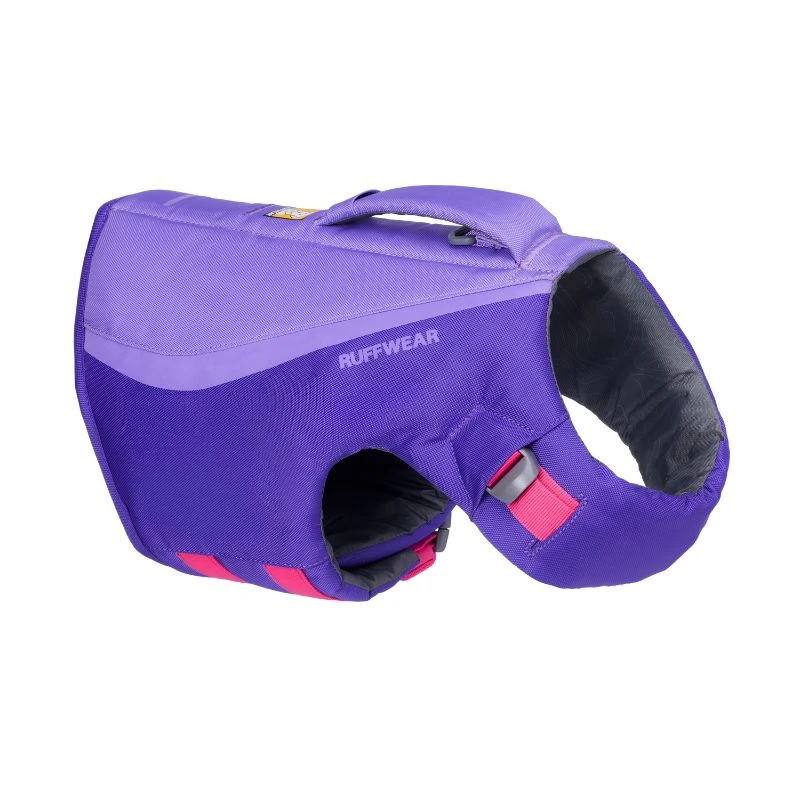
Our strongest all-round choice for most dogs. It combines well-positioned flotation, secure adjustment, a reinforced lifting handle and a broad range of sizes.
Best for: Owners who want one versatile premium life jacket for swimming, beach trips, boating and paddleboarding.
Main drawback: Ruffwear’s own UK store is currently out of stock, so availability depends on third-party UK retailers.
Best for Documented Buoyancy Testing
Hurtta Life Savior ECO
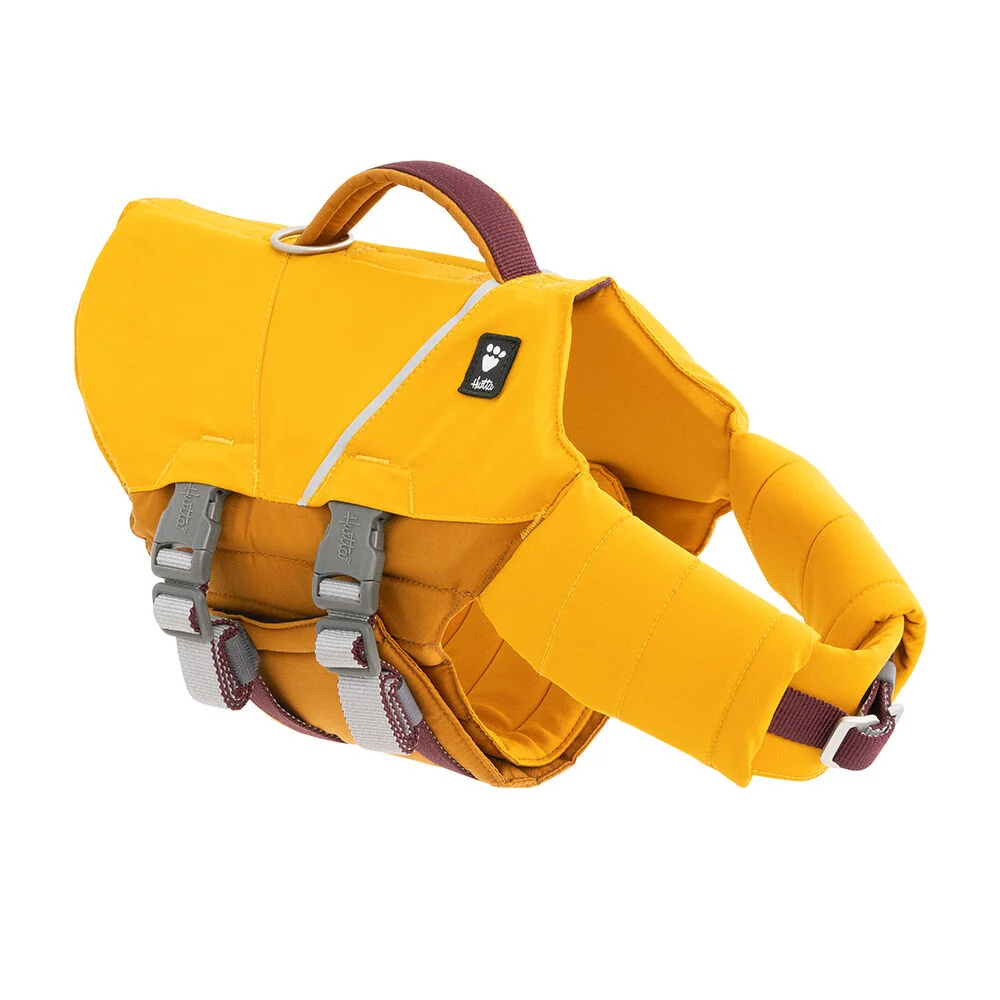
A premium flotation vest with supportive body coverage, three adjustment points and unusually clear manufacturer documentation around buoyancy and handle testing.
Best for: Owners who particularly value documented product testing and a close, supportive fit.
Main drawback: It sits firmly in the premium price bracket and still requires careful individual sizing and fit checks.
Best Value
EzyDog DFD Standard
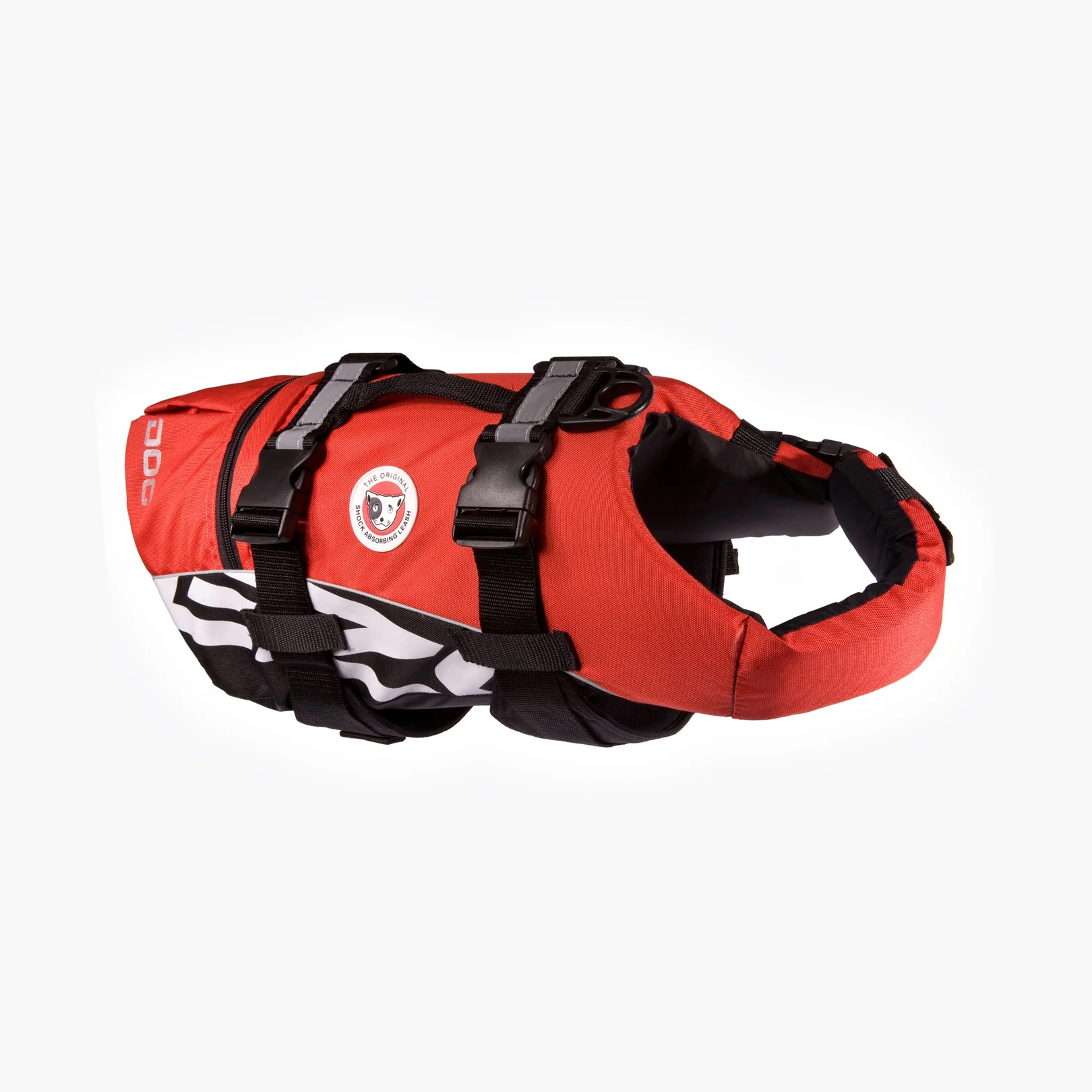
A straightforward flotation jacket with padded chest straps, a top grab handle and a particularly generous adjustment range.
Best for: Owners who want a capable everyday dog life jacket without moving straight to a premium-priced option.
Main drawback: It has less visibility-focused detailing than some newer alternatives.
Best for Paddleboarding & Lifting
Red Equipment Dog Buoyancy Aid
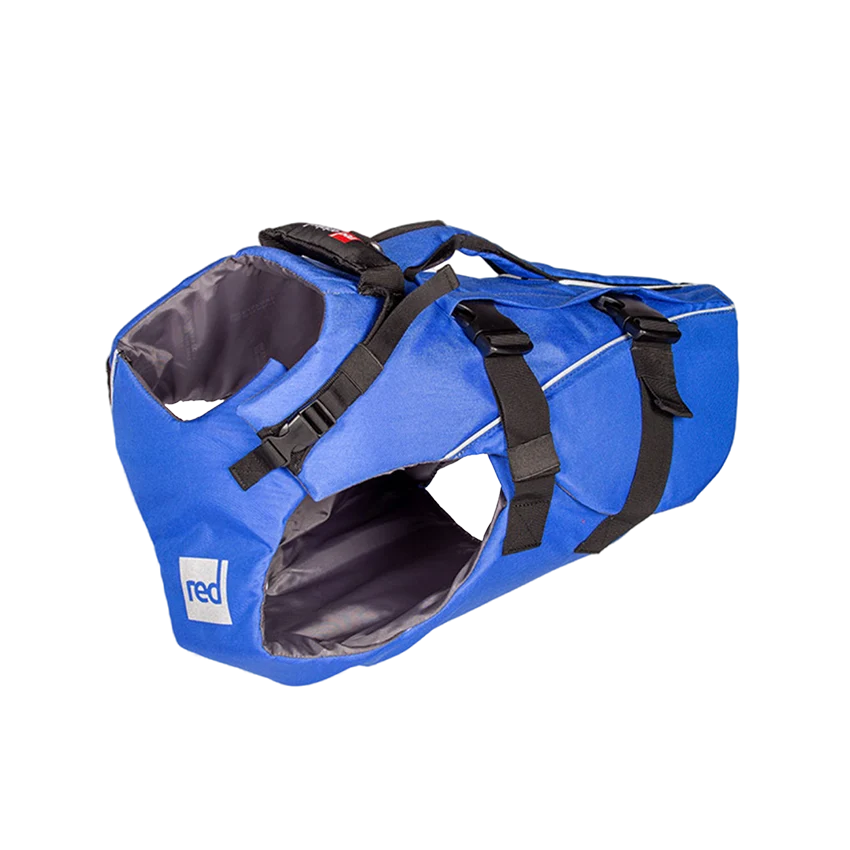
A watersports-focused buoyancy aid with chest flotation, generous front-leg openings and accessible grab points for helping a dog out of the water.
Best for: Dogs joining their owners on paddleboards, boats or platforms where lifting assistance is particularly useful.
Main drawback: It costs more than a basic flotation vest and availability can vary between sizes and colours.
A life jacket can add useful support, but it does not make rough water, strong currents or unsupervised swimming safe. If you’re still deciding whether flotation equipment is necessary for your dog, see whether your dog needs a life jacket first.
How we chose the best life jackets for dogs
This is a research-based buying guide rather than a hands-on laboratory test. Recommendations were selected by comparing current products available to UK buyers against the things that most affect safety and practical use.
We prioritised:
- Secure fit and adjustability — a jacket needs to remain correctly positioned when wet and while your dog is moving.
- Flotation design — including where the manufacturer places the buoyant material and whether the design allows natural movement.
- A usable lifting handle — particularly useful around boats, paddleboards, pontoons and awkward exits.
- Freedom of movement — especially around the shoulders and front legs.
- Visibility — bright colours, reflective detailing and light attachment points can all help.
- Size coverage — because a good design is irrelevant if it cannot be fitted securely to your dog.
- Materials and construction — particularly for regular outdoor or watersports use.
- Care requirements — a wet life jacket needs to be practical to rinse, dry and maintain.
- UK availability — recommendations need to be realistically obtainable rather than discontinued products that still appear in old reviews.
We also looked for meaningful evidence behind manufacturer claims instead of treating retailer star ratings or marketing phrases as proof that one jacket is safer than another.
Ruffwear Float Coat — best overall
The Ruffwear Float Coat is the strongest all-rounder in this group because it gets the fundamentals right without becoming unnecessarily complicated.
Ruffwear uses strategically positioned foam panels intended to support a dog’s natural swimming position. The current design also has a permanently attached adjustable neck closure, sheltered side-release buckles and water-compatible webbing. A reinforced handle sits along the top of the jacket for helping a dog out of the water.
The sizing range is another strength. Six sizes cover chest girths from approximately 33 cm to 107 cm, which makes the Float Coat relevant to a wide range of dogs. Reflective accents and a loop for Ruffwear’s optional Beacon light provide additional visibility options.
Who it suits
The Float Coat makes most sense for owners who want one well-rounded jacket for activities such as:
- normal recreational swimming;
- beach trips;
- paddleboarding;
- kayaking and boating;
- regular waterside holidays.
It is especially appealing if you expect to use the jacket frequently rather than keeping one only for occasional trips.
What stands out
Its biggest strength is balance. Some products emphasise flotation, others visibility or lifting assistance, but the Float Coat combines all of these reasonably comprehensively.
The relatively clean underbody design and positioning of the foam should also make it less cumbersome than heavily padded alternatives for many dogs.
Limitations and fit checks
It is a premium-priced product, and Ruffwear’s own UK website currently shows the Float Coat as out of stock. Current UK specialist retailers do have stock, so it remains realistically available, but availability should be checked before purchase.
Do not choose the size by breed alone. Measure around the widest part of your dog’s ribcage and use the currentRuffwear sizing chart.
Bottom line: the Float Coat is the strongest general recommendation if you want a robust, versatile life jacket and are comfortable paying more for it.
View the Ruffwear Float Coat at a current UK stockist
Hurtta Life Savior ECO — best for documented buoyancy testing
The Hurtta Life Savior ECO takes a slightly different route.
Hurtta states that the vest has been laboratory tested at the Finnish Institute of Occupational Health and meets the buoyancy requirements of EN ISO 12402-5:2006. The manufacturer also states that the handle has undergone tensile-strength testing in accordance with SFS-EN ISO 13934-1.
That does not mean every dog wearing one is protected from every water hazard, nor should a canine flotation vest be treated as equivalent to an assurance that swimming conditions are safe. What it does provide is an unusually clear level of documented manufacturer testing within this product category.
The current Life Savior ECO also has three adjustment points, a supportive stomach section, flexible flotation material, reflective detailing and a stainless-steel lead attachment ring. UK-facing sizes currently cover product bands from 5–10 kg through to 30–40 kg.
Who it suits
Consider the Hurtta if:
- documented product testing is high on your priority list;
- you want substantial underbody support;
- you regularly use flotation equipment for swimming, boating or other waterside activities;
- you want a premium alternative to Ruffwear.
What stands out
The evidence behind the flotation and handle claims is the main differentiator.
The close-fitting stomach section should also appeal to owners who prefer more supportive body coverage rather than a relatively open harness-style fit.
Limitations and fit checks
The Life Savior ECO is another premium option, so it will be more product than some occasional swimmers need.
Its labelled sizes use dog-weight bands, but weight alone should never be your only fit check. Follow Hurtta’s current measurement instructions and make sure the vest remains secure without restricting your dog’s shoulders, chest expansion or swimming movement.
Bottom line: this is the strongest alternative for owners who place particular value on documented manufacturer testing.
View the Hurtta Life Savior ECO
EzyDog DFD Standard — best value
The EzyDog DFD Standard is a good example of why the lowest-priced product does not have to be a stripped-back afterthought.
Its design includes internal flotation foam, padded chest straps, a top grab handle and a nylon D-ring for attaching a lead while around the water. The current UK range runs from XS to XL, with published girth ranges extending up to 122 cm on the largest size.
That makes it particularly useful for owners who need substantial adjustment range without moving immediately into the premium end of the market.
Who it suits
The DFD Standard is worth considering for:
- normal recreational swimming;
- beach and boating trips;
- dogs that need generous chest adjustment;
- owners who want the essential flotation-and-handle combination at a lower price position.
What stands out
The large sizing overlap is useful. Dogs rarely fit neatly into assumptions such as “medium breed = medium jacket”, and EzyDog publishes weight, girth and length guidance for the Standard.
The padded chest straps also spread support across the front of the body rather than relying on a narrow strap when the jacket is being worn.
Limitations and fit checks
If visibility in poor light is a major consideration, EzyDog’s newer DFD X2 Boost has reflective piping and a dedicated light attachment point, whereas the Standard is the simpler design.
We have deliberately not included both as separate recommendations because they overlap considerably. The Standard earns its place here because it fills the clearer value role.
Bottom line: choose the DFD Standard if you want a straightforward, well-specced flotation vest without automatically paying premium-brand prices.
Red Equipment Dog Buoyancy Aid — best for paddleboarding and easier lifting
If your dog accompanies you on a paddleboard or boat, getting them out of the water can matter almost as much as keeping them supported while they are in it.
The Red Equipment Dog Buoyancy Aid is particularly interesting here. Red uses chest flotation, large front-leg openings and accessible grab handles intended to make it easier to assist a dog from the water. The design also includes reflective detailing and an integrated lead attachment point.
Its five sizes span approximately 33 cm to 114 cm around the chest, giving it one of the widest published girth ranges in this shortlist. The outer material is Cordura with nylon webbing and EVA flotation foam.
Who it suits
This is particularly well suited to:
- paddleboard users;
- boat owners;
- dogs regularly helped onto pontoons or platforms;
- owners who want prominent grab points;
- active watersports use.
What stands out
The handling arrangement is the main reason it earns a separate recommendation rather than becoming another general-purpose vest.
A single top handle may be completely adequate for many owners. Around a board or boat, however, being able to get a secure grip quickly can be especially useful.
Limitations and fit checks
This is not the cheapest way to give a dog extra flotation, and stock currently varies between size and colour combinations.
Red advises measuring around the deepest part of the chest just behind the front legs. The jacket should remain stable when wet and should not move excessively around the body when you take hold of the handle.
After saltwater use, Red advises rinsing the jacket with fresh water and hanging it to dry.
Bottom line: the Red Equipment design makes most sense when lifting and assisting your dog around a paddleboard, boat or platform is an important part of the use case.
View the Red Equipment Dog Buoyancy Aid
Dog life jacket comparison
| Product | Sizing | Lifting assistance | Visibility | Particularly good for | Main limitation |
|---|---|---|---|---|---|
| Ruffwear Float Coat | XXS–XL; 33–107 cm girth | Reinforced low-profile handle | Reflective accents; light attachment loop | All-round swimming, beach trips, paddleboarding and boating | Premium price; Ruffwear UK direct stock is currently unavailable |
| Hurtta Life Savior ECO | Current variants cover dogs from 5–40 kg | Tensile-strength-tested handle | Multiple reflectors | Owners prioritising documented testing and supportive fit | Premium price and weight-based size bands still require careful fit checking |
| EzyDog DFD Standard | XS–XL; published girth ranges reach 48–122 cm | Top grab handle | Bright colour options | Everyday swimming and owners seeking a lower-cost mainstream option | Less reflective detailing than the X2 Boost |
| Red Equipment Dog Buoyancy Aid | XS–XL; 33–114 cm chest range | Multiple grab points | Reflective detailing | Paddleboards, boating and helping a dog onto a platform | Higher price than basic flotation vests; some size/colour combinations have variable stock |
Specifications and availability checked 10 September 2026. Product ranges and stock change, so always check the current manufacturer’s sizing information before ordering.
How to choose the right life jacket for your dog
The logo on the jacket matters far less than whether it works properly for your dog.
Here are the decisions that make the biggest difference.
Start with chest girth, not breed alone
Measure your dog rather than guessing.
For most dog life jackets, chest or girth measurement is particularly important. EzyDog defines girth as the circumference of the torso directly behind the front legs, while Ruffwear uses the widest part of the ribcage for its Float Coat sizing.
Always use the measurement method supplied for the exact product you are buying. Two manufacturers may define or weight measurements differently.
A Labrador, French Bulldog or Cocker Spaniel label is not a size.
Small dogs can be particularly awkward to fit because bulky flotation panels may overwhelm a short body. If that is your main problem, Life Jackets for Small Dogs looks specifically at flotation equipment for smaller frames.
Flat-faced dogs introduce another consideration because swimming can already be physically demanding. PDSA notes that short-nosed dogs can find swimming particularly hard work.
For a French Bulldog, the body shape and breathing considerations justify more specific equipment choices; see Best Swimming Vests and Life Jackets for French Bulldogs.
Check that the jacket cannot twist or ride up
A jacket that looks neat while your dog is standing on dry ground can behave differently once the material, straps and coat are wet.
Before relying on it:
- adjust every strap correctly;
- check that the jacket cannot rotate substantially around the body;
- make sure it does not ride towards your dog’s head;
- check for rubbing around the front legs and chest;
- make sure your dog can breathe and move normally;
- recheck the fit after the first few minutes in the water.
The aim is secure, not tight.
Look at where the flotation sits
More foam is not automatically better if it interferes with movement.
Look for a design that supports the dog without making normal paddling awkward. Both Ruffwear and Hurtta explicitly describe their current flotation arrangements as being designed to support natural swimming movement.
Avoid making purchase decisions from vague claims such as “maximum buoyancy” unless the manufacturer provides meaningful information behind them.
Choose a handle you can actually use
The handle should be easy to reach and securely integrated into the jacket.
Think about your real use case. Helping a 6 kg dog onto a low pool edge is very different from trying to assist a large wet dog beside a paddleboard.
A handle is an assistance feature, not permission to suspend or repeatedly carry a dog by the jacket unless the manufacturer specifically supports that use.
Prioritise visibility around open water
Bright colours and reflective trim can make a dog easier to follow against dark water, waves or poor light.
They do not replace supervision, but when two otherwise suitable jackets are close, better visibility is a worthwhile advantage.
Make sure your dog can move freely
Watch your dog walk before entering the water.
The jacket should not cause:
- shortened front-leg movement;
- obvious rubbing;
- reluctance to move;
- abnormal posture;
- excessive pressure around the neck;
- straps slipping into the armpits.
A dog that is clearly uncomfortable on land is unlikely to become more comfortable once swimming.
How should a dog life jacket fit?
A properly fitted dog life jacket should feel secure around the body without preventing normal breathing or shoulder movement.
A useful fit check is:
- Measure before ordering. Use the manufacturer’s instructions for the exact model.
- Adjust on dry land. Centre the flotation correctly before tightening straps.
- Check the shoulders and front legs. Your dog should be able to walk normally.
- Check for rotation. Moderate hand pressure should not make the jacket spin freely around the torso.
- Test in shallow, controlled water first. Never make the first test a deep-water swim.
- Recheck when wet. Webbing, fur and body position can all change once immersed.
- Inspect after swimming. Look for redness or rubbing around the chest, neck and front legs.
Do not keep using a jacket that only fits when its straps are taken to the extreme end of their adjustment range. Another size or design may fit your dog better.
Does every dog need a life jacket?
No.
A capable dog swimming briefly in calm, shallow, controlled water may not require additional flotation simply because life jackets exist.
They become more useful when the consequences of fatigue or difficulty are greater. That can include:
- inexperienced swimmers;
- some puppies and older dogs;
- dogs that find swimming physically demanding;
- dogs around boats and paddleboards;
- open water;
- situations where the exit is more difficult;
- dogs that benefit from extra visibility or support.
PDSA specifically notes that short-legged and short-nosed dogs can find swimming particularly hard work.
A jacket should nevertheless solve a real problem rather than becoming a substitute for judging whether the activity is suitable in the first place.
For a fuller decision based on your dog’s swimming ability, body shape and activity, read Do Dogs Need Life Jackets?.
A life jacket does not make unsafe water safe
A flotation vest can provide additional buoyancy and a useful point of assistance. It cannot make dangerous water conditions safe. Continue to supervise your dog continuously.
Continue to supervise your dog continuously.
PDSA advises avoiding fast-flowing or flooded rivers, reservoirs and rough seas because hazards can include currents, hidden objects, cold water, waves and debris.
A life jacket also cannot protect your dog from:
- blue-green algae or other contaminated water;
- underwater debris or fishing line;
- excessive water ingestion;
- prolonged cold-water exposure;
- exhaustion;
- waves, tides or strong currents;
- an unsafe or inaccessible exit.
Before allowing a dog to swim somewhere unfamiliar, use the Dog Swimming Safety Guide to check the location, entry and exit, water conditions and supervision requirements.
Do not assume a dog can continue indefinitely because the jacket is keeping them afloat. Enthusiastic dogs can keep swimming or retrieving after they have begun to tire. Can Dogs Swim Too Much? explains the changes in swimming behaviour that suggest it is time to stop.
Beach days need more than flotation
At the coast, also think about heat, shade, fresh drinking water and sun exposure rather than concentrating entirely on the water.
Pale-skinned, sparsely coated or vulnerable areas may need additional sun protection. Best Dog Sunscreens (UK Buyer’s Guide) can help you choose an appropriate product where sunscreen is useful.
What should you do if your dog gets into trouble in the water?
If your dog gets into trouble in the water
Do not put yourself at risk by entering hazardous water after your dog. At the coast, move to a place the dog may be able to reach safely and call them towards you. If they remain in trouble, call 999 or 112 and ask for the Coastguard.
Once your dog is out, seek veterinary advice promptly if they have struggled in the water or show concerning signs such as:
- persistent coughing;
- difficulty breathing;
- collapse or marked weakness;
- unusual confusion or poor coordination.
A life jacket can buy useful support and give you a handle to assist a dog in some circumstances, but it is not a substitute for professional rescue where entering the water would put you in danger.
Which dog life jacket should you choose?
If you want the simplest decision:
Choose the Ruffwear Float Coat if you want the strongest all-round balance of fit adjustment, flotation design, movement, visibility and lifting assistance.
Choose the Hurtta Life Savior ECO if documented manufacturer testing is especially important to you.
Choose the EzyDog DFD Standard if you want a solid everyday flotation jacket while keeping the cost below the premium products.
Choose the Red Equipment Dog Buoyancy Aid if your dog regularly accompanies you on paddleboards or boats and convenient lifting assistance is particularly valuable.
For very small dogs and unusual body shapes, do not be afraid to ignore the overall winner. A jacket that fits your individual dog properly is a better choice than a higher-ranked jacket that does not.
Frequently asked questions
Are dog life jackets and buoyancy aids the same thing?
The terms are used inconsistently in the canine market.
Manufacturers variously use life jacket, life vest, dog flotation device, PFD and buoyancy aid. Do not assume the terminology alone indicates a particular verified flotation performance.
Instead, look at the actual design, fit, flotation information, manufacturer testing and intended use of the individual product.
Can I attach a lead to a dog life jacket?
Only use a jacket’s lead attachment if the manufacturer provides one and describes it as suitable for that purpose.
The EzyDog DFD Standard, Hurtta Life Savior ECO and Red Equipment Dog Buoyancy Aid all currently include dedicated lead attachment points.
A lead attachment does not turn a flotation vest into an escape-proof walking harness, so follow the manufacturer’s instructions.
Should a dog wear a life jacket in a swimming pool?
Some dogs may benefit from one, particularly inexperienced swimmers or dogs that need additional support, but a jacket does not solve the biggest pool risks by itself.
Your dog still needs continuous supervision and an easy, familiar exit. Never rely on flotation equipment as a substitute for preventing unsupervised access to the pool. PDSA likewise advises never leaving a dog unattended in a swimming or paddling pool.
Final recommendation
For most owners looking for one versatile dog life jacket, the Ruffwear Float Coat is our first choice. Its broad size range, well-positioned flotation, secure adjustment and reinforced lifting handle make it the strongest all-round package we found.
The Hurtta Life Savior ECO is the more evidence-led alternative if documented buoyancy testing is particularly important, while the EzyDog DFD Standard offers the strongest value proposition and the Red Equipment Dog Buoyancy Aid is especially appealing for paddleboarding and boating.
Whichever you choose, measure your dog carefully and test the finished fit in controlled shallow water first.
A life jacket should give your dog additional support and you additional options. It should never give either of you false confidence about unsafe water.